Case Study · Humane World for Animals · Four Paws · Born Free · 2026
Nothing to Declare A trophy hunting comedy for Humane World for Animals
A one-minute comedy drama in which an airport customs officer discovers trophy hunting contraband in a passenger's luggage – made to reach the people who had never heard of the issue of importing hunting trophies.
2M+
Total views
Organic · first 7 days
7
Days to 2M
Post-publish organic
£0
Paid distribution
100% organic reach
add
Shares / reposts
Platform figure needed
add
Engagements
Platform figure needed
The film
Watch
Nothing to Declare · Humane World for Animals · Four Paws · Born Free · 2026 · Watch on YouTube ↗
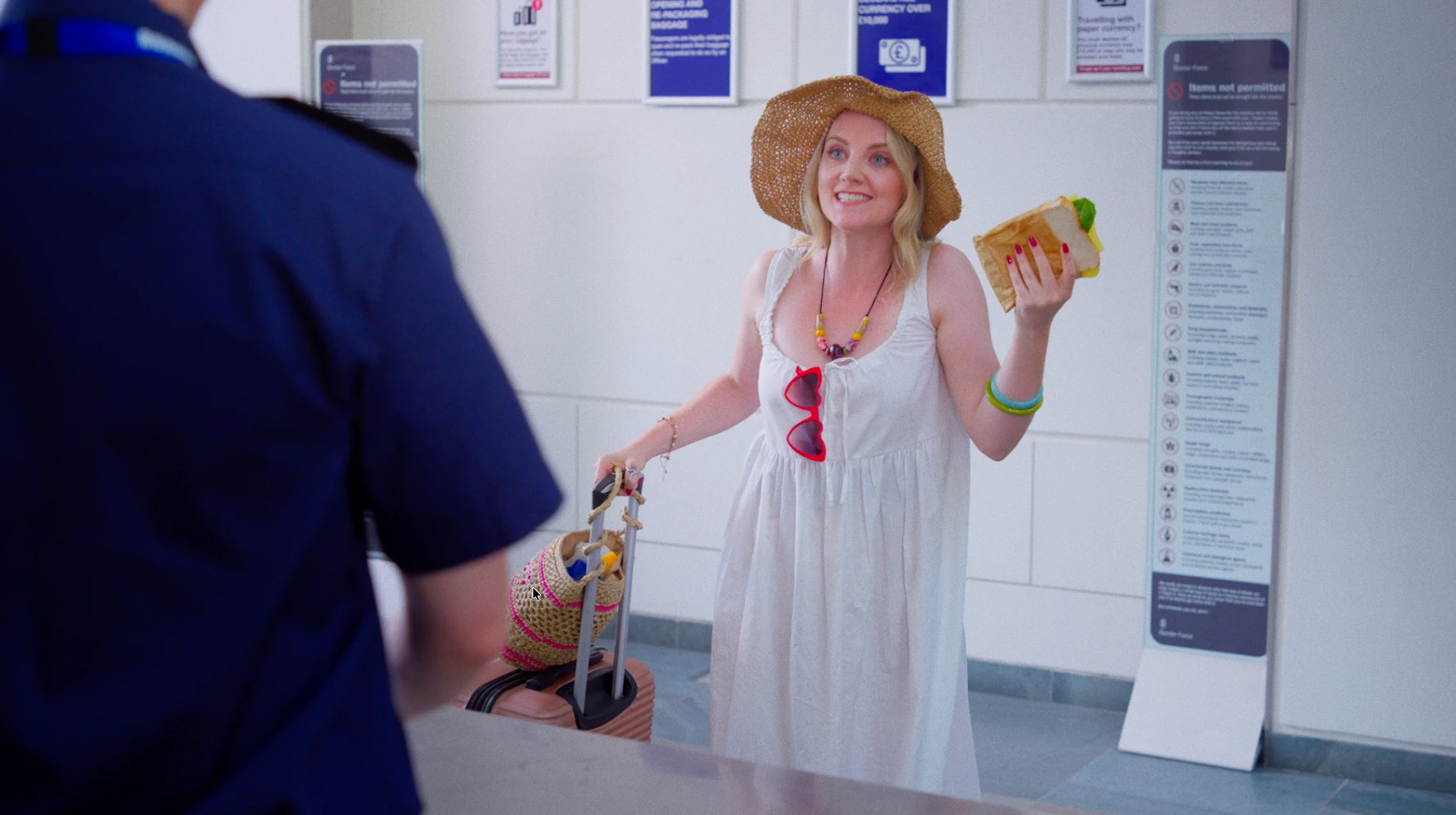
Evanna Lynch on set · Nothing to Declare · Campaign Film Ltd, 2026
01The challenge
Reaching an audience that wasn't looking
Trophy hunting kills an estimated 600,000 animals a year. In the UK, public awareness of its scale – and of the legal status of much of the trade in wildlife products – is low. The organisations working to end it have faced a consistent problem: direct, guilt-based appeals drive audiences away rather than toward the issue. Previous campaigns in this space had spoken largely to the already-converted, generating little spread beyond an existing supporter base.
The brief was to reach a genuinely new audience – people who would never seek out wildlife welfare content – on social platforms where they were not looking for it. Distribution had to be entirely organic to demonstrate authentic engagement rather than bought reach. The film needed to work as a short-form social asset, completeable in under 90 seconds, on platforms where three seconds is a victory.
The production was designed from the outset to serve two formats simultaneously: a 16:9 master for YouTube and broadcast contexts, and a vertical cut for Instagram and TikTok. Framing and blocking decisions on set were made with both aspect ratios in mind – every key action had to read cleanly in each, which shaped how actors were positioned and how shots were composed.
02The insight
Seriousness converts. Comedy recruits.
Conservation communications have long relied on gravity – the dying animal, the devastated habitat, the mournful voice-over. These formats convert existing supporters but they don't recruit new ones; people who don't already care scroll past them.
The insight was that the trophy hunter – brazening out a bag full of contraband through airport customs – is an inherently comic figure. And comedy, unlike seriousness, doesn't need an existing emotional investment to land. People share things that make them laugh. A share is an active endorsement that an impression is not.
The reach strategy was built on this from the ground up. Casting Daniel Fox – comedian and actor with a large Instagram following (@dnlfoxx) – and Evanna Lynch, known to a global audience from the Harry Potter films and with an engaged following of her own (@evannalynch), meant the film carried its own distribution. Both performers have substantial, engaged social followings in exactly the audience the campaign needed to reach. When they share, it doesn't look like campaign content – it looks like something they found funny.
On top of the cast followings, the film was released as a collaborative post across Humane World for Animals, Four Paws, and Born Free – three organisations combining their audiences rather than publishing in parallel. The result was a single piece of content amplified by multiple large platforms at the same moment, which is how a one-day shoot on a charitable budget reaches two million people in a week.
03Strategy
Social-first, cast as distribution
Primary objective: reach 18–45 year-olds outside the existing wildlife welfare audience on social platforms, generating enough organic shares to put the issue of importing hunting trophies in front of people who would never seek it out – made possible by the combined social reach of Daniel Fox, Evanna Lynch, and three partner organisations posting simultaneously.
Secondary objective:placeholder – add press and policy visibility outcomes. Known: DEFRA had sight of the film. Confirm any national press coverage, policy citations, or parliamentary references before publishing.
The distribution strategy was social-first and organic. Daniel Fox and Evanna Lynch were cast in part for their established social followings in exactly the demographic the campaign needed to reach, and in part because the comedy required performers who could hold a joke straight. The film was released as a collaborative post across Humane World for Animals, Four Paws, and Born Free – combining the three organisations' audiences at the point of publication rather than building reach incrementally. No media spend. The film had to earn its views.
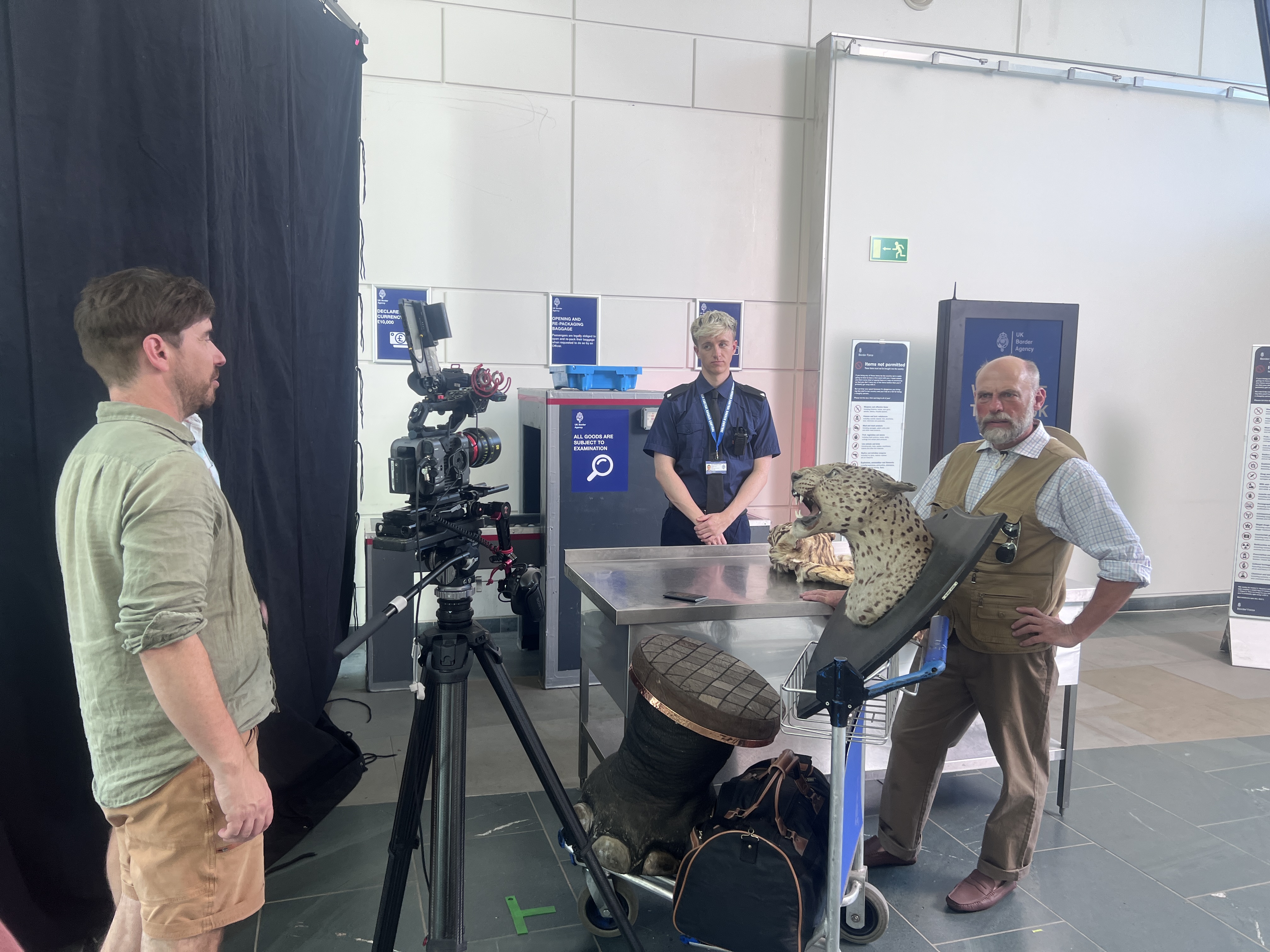
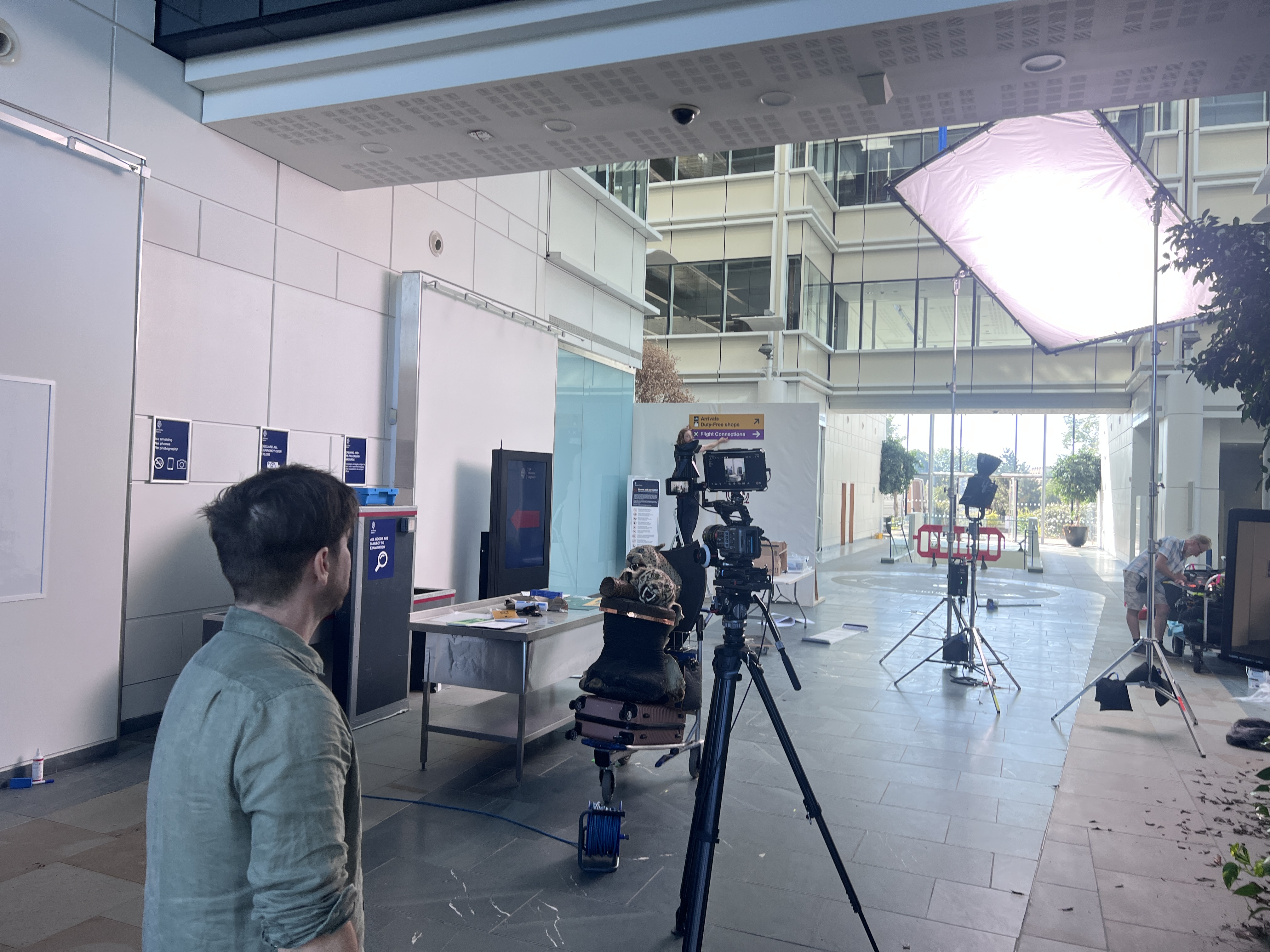
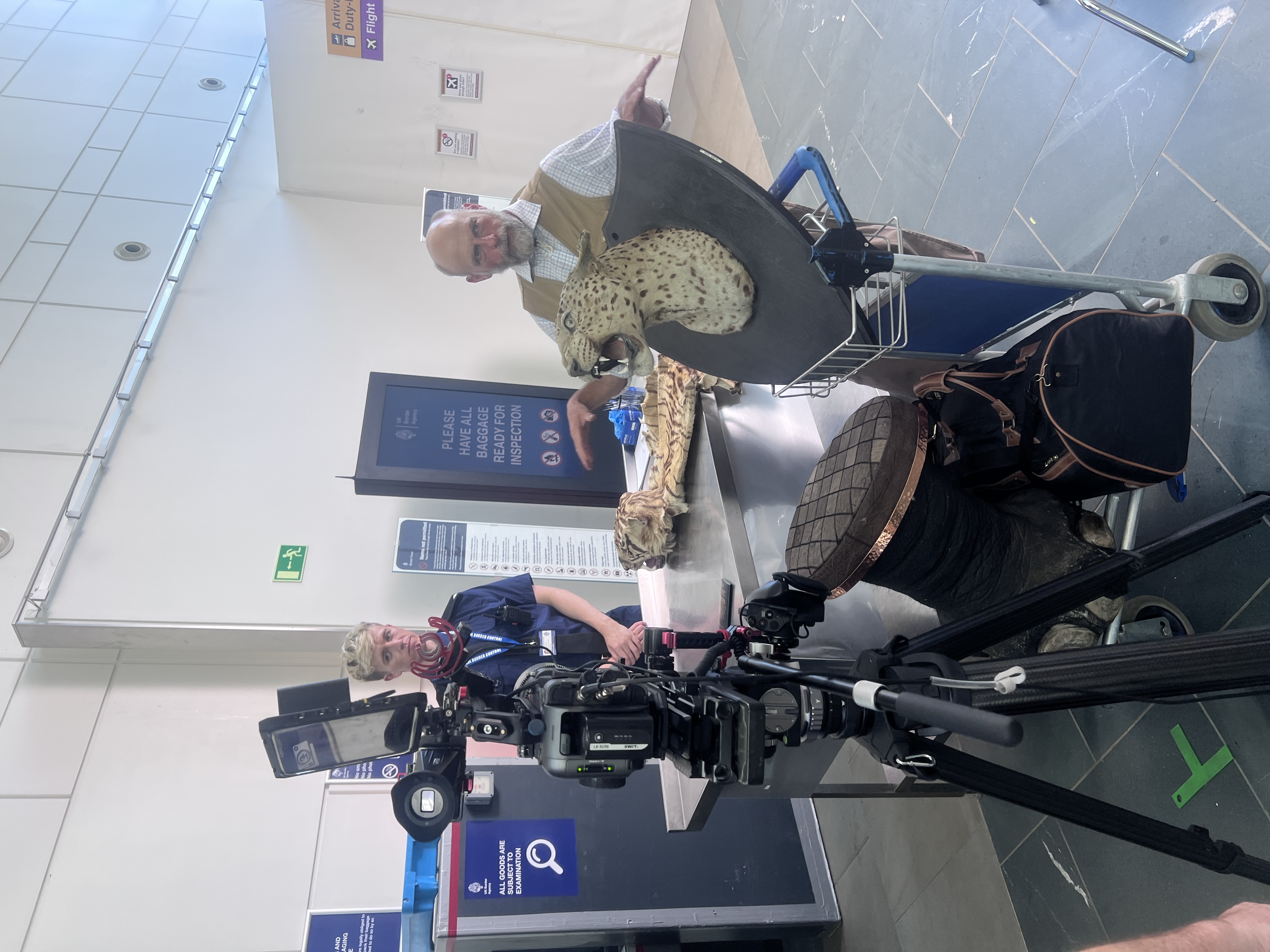
Left: Lewis Davies (DOP) with Chris Porter and Daniel Fox · Right: set build underway, 07:00 call · Campaign Film Ltd, 2026
04Execution
One location. One day. Eleven crew.
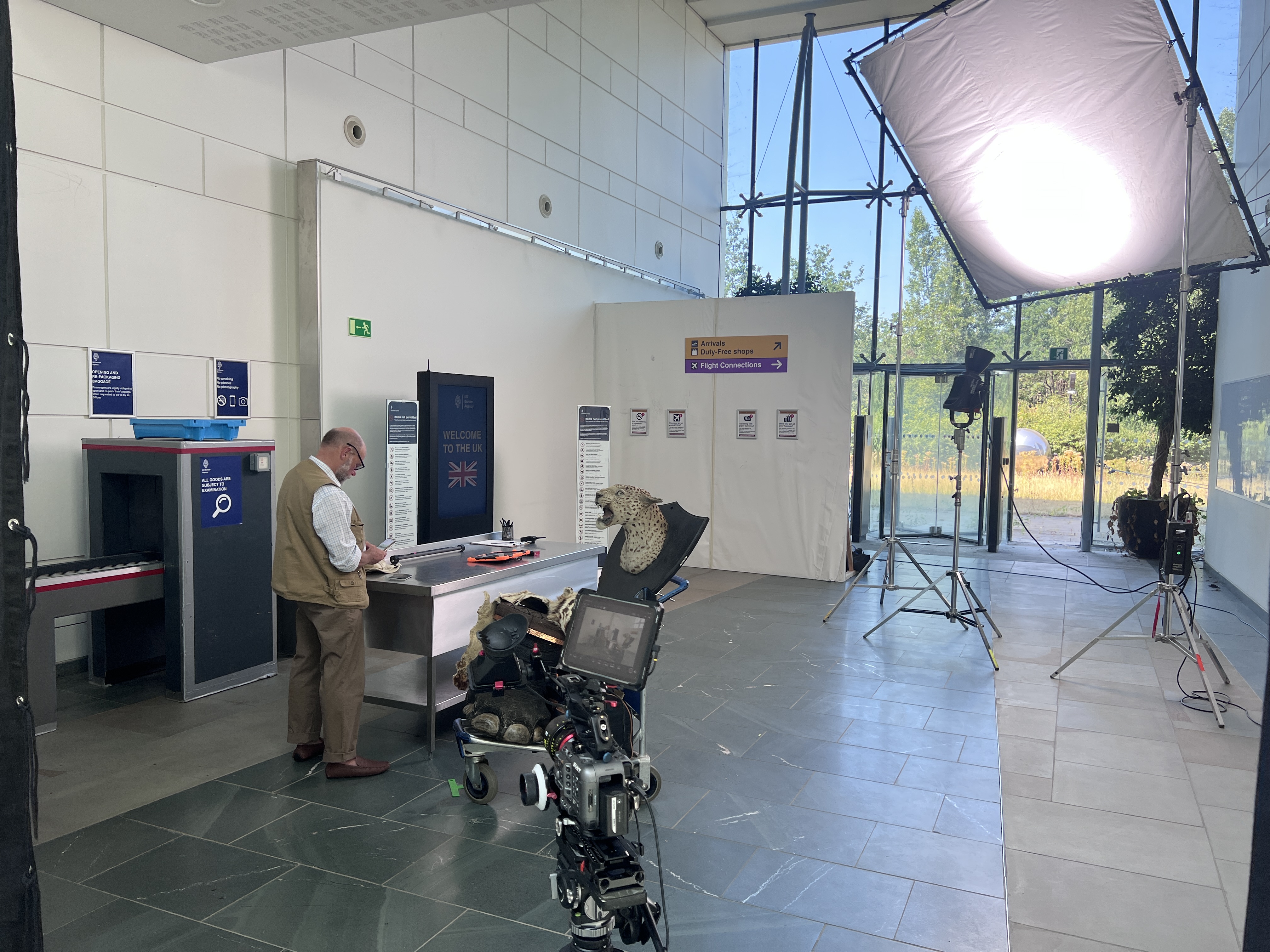
Shot in a single day on a location sourced by Location Works, who found and secured a disused office building that the production design team transformed into a working airport customs hall. On a modest budget, the design team built an environment convincing enough to carry a straight-faced documentary aesthetic – the right signage, the right fixtures, the right institutional drabness. That credibility is load-bearing: a customs hall that reads as a set breaks the joke before it starts.
Cast through casting director Catriona Dickey: Daniel Fox, Evanna Lynch, and Chris Porter. Daniel Fox and Evanna Lynch bring celebrity punch to the project – both have substantial, engaged social audiences whose shares would carry weight – alongside the straight comic chops the premise required. The escalating premise is simple: a passenger's luggage yields a succession of increasingly brazen trophy hunting contraband, each item played entirely deadpan by the officer and with mounting entitlement by the passenger.
Props placeholder – confirm with Humane World for Animals before publishing: where did the props (including any wildlife-adjacent materials) come from, and how were they sourced? This needs client sign-off before it appears on the page.
The film was shot and delivered in two cuts from the outset: a 16:9 master and a vertical cut for Instagram and TikTok. Framing and blocking decisions were made on set with both aspect ratios live – every key action composed to read cleanly in each.
Left: the set dressed at 980 Great West Road · Right: Daniel Fox and Chris Porter between takes · Campaign Film Ltd, 2026
05Craft
Stillness as a comic tool
The cinematographic language was deliberately institutional. Static, locked-off framing – the visual grammar of CCTV and surveillance documentation – made the customs hall feel like a real environment rather than a set, and made the contraband feel like evidence rather than performance. Handheld camera movement would have broken the joke by signalling "film"; the stillness of the frame put all the comic load exactly where it belongs, on the performances.
Direction centred on the gap between the two performances: the officer's procedural restraint against the passenger's escalating entitlement. That gap is where the humour lives, and it required careful calibration – the comedy collapses if either register tips too far. The edit respects classical joke structure: reveal, beat, escalation, beat, reveal – each contraband item given room to land before the next. No score was used; ambient room tone throughout, which preserved the institutional aesthetic and allowed the silence after each reveal to do its work.
Cinematography
Static, locked-off framing. Surveillance-camera aesthetic. Institutional rather than cinematic.
Direction
Comedy calibrated in the gap between officer restraint and passenger entitlement.
Sound design
No score. Ambient room tone throughout. Silence after each reveal is load-bearing.
Edit
Classical joke structure: reveal, beat, escalation. Pacing controlled to let each item land.
06Results
2 million views. Zero paid spend.
The film reached two million views within seven days of publication, entirely through organic sharing across the client's social channels. verify No paid distribution was used. Add: platform breakdown – Meta vs YouTube vs other; organic share/repost figure; engagement rate; comparative context against client's previous best-performing content.
The scale and speed of the reach reflected the film's core strategic gamble: that comedy, given the right cast and a strong enough premise, would travel without media spend. The two-million-view figure in seven days represented a verify: uplift vs. client's previous best improvement on prior campaign performance and put the issue of trophy hunting in front of an audience that had no prior relationship with wildlife welfare campaigning.
Add if available: any press coverage generated; downstream campaign impact (petition sign-ups, fundraising uplift, policy citations); any third-party commentary or amplification from public figures.
Results screenshot needed
Social post at peak views, or platform analytics screengrab showing the spike. Adds credibility to the 2M claim.
[Client quote needed – from Nick Hawkes, Simon Pope, or Ed Fox. Should name a specific outcome and reflect trust in the creative direction. Example structure: "We gave Andy total creative freedom, and within a week the issue of trophy hunting was in front of two million people who had never heard of us before."] get approved quote